Chilam Joshi Festival Guide: Traditions, Dates and Travel Tips
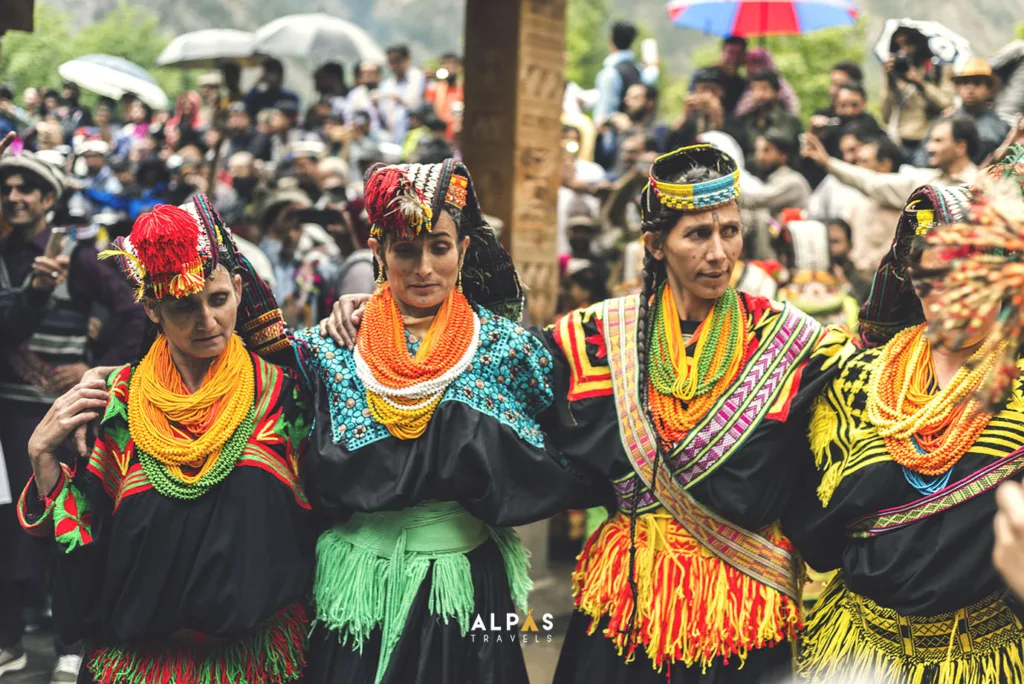
There are festivals you attend, and then there are festivals you feel. The Chilam Joshi belongs firmly in the second category.
Set in the enchanting Kalash Valleys, this ancient spring celebration is one of the most fascinating cultural experiences in Pakistan. It is colorful, rhythmic, spiritual, and wonderfully alive. Drums echo through the valleys, traditional songs carry through mountain air, and communities gather in a celebration rooted in gratitude, renewal, and identity.
For travelers, Chilam Joshi is more than an event to watch from the sidelines. It is a chance to witness living heritage, connect with a unique indigenous culture, and experience northern Pakistan beyond landscapes and trekking trails.
This guide covers the history, traditions, Chilam Joshi festival dates, travel logistics, and practical tips to help you experience the festival respectfully and meaningfully.
Chilam Joshi Festival Quick Guide
The Chilam Joshi Festival is a spring festival celebrated by the Kalash community in northern Pakistan.
- Location: Kalash Valleys, Chitral
- Time: 13th to 16th May
- Purpose: Spring celebration, thanksgiving and matchmaking traditions
- Duration: Typically 4 days
- Famous For: Traditional dances, rituals and Kalash culture
Table of Contents
- What is Chilam Joshi Festival?
- History and Cultural Significance
- When is Chilam Joshi Celebrated?
- Traditions and Rituals of the Festival
- Where to Experience Chilam Joshi in Kalash Valleys
- How to Reach Kalash for the Festival
- What to Expect as a Traveler
- Travel Tips for Visiting Chilam Joshi
- Nearby Places to Combine with Your Trip
- FAQs
What is Chilam Joshi Festival?
The Chilam Joshi festival is a traditional spring festival celebrated by the Kalash people, one of the oldest indigenous communities in the region.
Held each year in May, this four-day celebration marks the arrival of spring and expresses gratitude for livestock, harvest, fertility, and community well-being. It is often described as the most joyful of all Kalash festivals.
And yes, there is dancing. Lots of it.
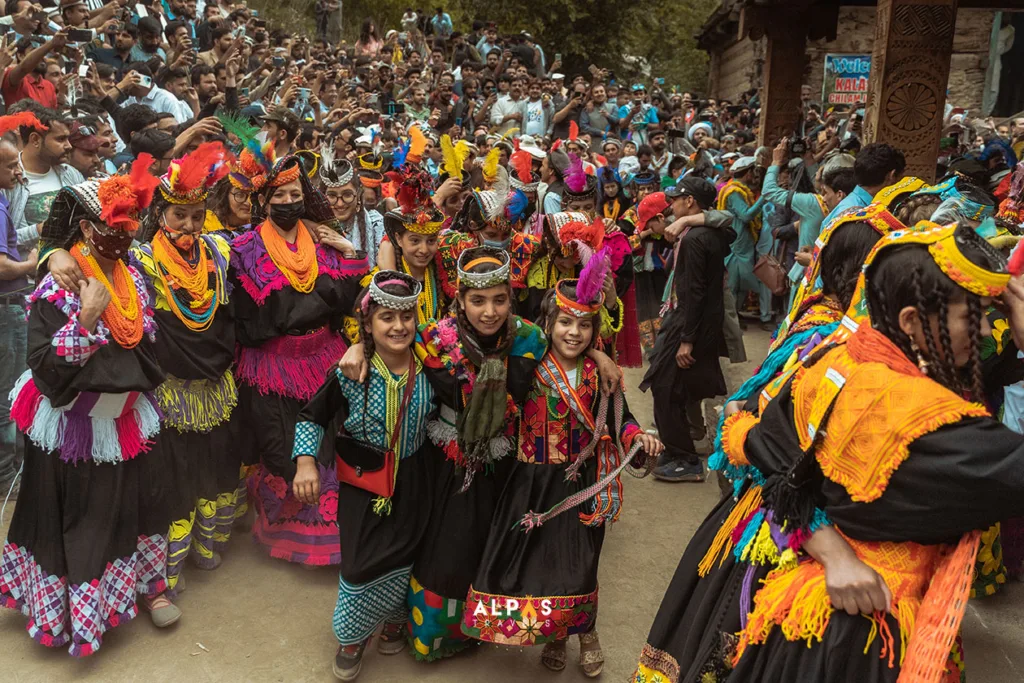
But the Kalash spring festival is much more than music and colorful clothing. It is deeply ceremonial, rooted in spiritual traditions that have been preserved for centuries.
For visitors, it offers a rare chance to witness a culture that remains beautifully distinct.
History and Cultural Significance
To understand Chilam Joshi traditions, it helps to understand the Kalash worldview.
The Kalash people have preserved a unique polytheistic belief system, seasonal rituals, and oral traditions that predate many later influences in the region. Their festivals are not performances staged for tourists. They are expressions of community life.
Chilam Joshi begins with prayers and offerings for prosperity. Milk, a symbol of purity and abundance, traditionally plays a role in ceremonial practices. Songs and dances follow, often gathering multiple villages into shared celebration.
There is also a social dimension often associated with matchmaking traditions, though this is frequently romanticized in travel writing. The reality is more nuanced and rooted in social interaction within the community.
This is what makes the Kalash culture festival so compelling. It feels lived, not curated.
When is Chilam Joshi Celebrated?
The Chilam Joshi festival dates usually fall in mid-May from 13th to 16th May, though exact dates have shifted lightly in the past. However in recent years, the dates have remained the same
The festival generally runs for four days and is celebrated across the Kalash valleys, particularly in Bumburet, Rumbur, and Birir.
May is also one of the loveliest times to visit the region. Spring colors are out, weather is pleasant, and valleys feel vibrant. If you’re planning a cultural trip through northern Pakistan, this season pairs beautifully with blossom travel.
Check out our Blossom Season in Pakistan Guide blog
Because accommodation can fill up around the festival, advance planning is wise.
Traditions and Rituals of the Festival
TWhat makes the Chilam Joshi so fascinating isn’t just the dancing or the color, but the layers of rituals that unfold through the festival. Each ceremony carries symbolism tied to spring, purity, fertility, and community life. For visitors, these moments offer a glimpse into living traditions that have been preserved in the Kalash Valleys for generations.
Picking Bisha Flowers (Pushen Parik)
One of the earliest and most beautiful traditions begins in the mountains, where children head out to gather bisha flowers, believed to be the first flowers of spring. For the Kalash community, these blooms signal the season’s arrival and hold ceremonial significance.
Known botanically as Piptanthus Nepalensis, the flower is used in temple decorations and in rituals like Chirik Pipi. But beyond ritual use, there’s something poetic about children climbing mountain slopes to gather spring’s first blossoms. It feels like the festival begins with nature itself.
Temple Decorations (Pushi Behak)
Once the flowers are gathered, the tradition of Pushi Behak begins. Temples and sacred spaces are decorated with fresh bisha flowers and walnut branches, replacing those from the previous year.
In valleys like Rumbur, the ceremony often starts long before dawn. Children gather late at night, drums begin to echo, and dancing starts even before the decoration ritual. By early morning, processions move toward the Temple of Jestak Han, where altars are renewed and prayers quietly woven into the act of decorating.
It’s part celebration, part devotion — and entirely mesmerizing.
Baby Purification Ceremony (Gul Parik)
Among the most meaningful Chilam Joshi traditions is Gul Parik, a purification ceremony for babies born between festivals and for their mothers.
In the Rumbur Valley, sacred walnut bread is prepared using specially purified flour and tools. The ceremony serves as a prayer for the child’s health and a symbolic purification of mother and baby.
In Bumburet, the ritual takes another form. Milk is used in purification rites, walnuts and dried mulberries are shared, and the whole village participates in what feels less like an isolated ritual and more like a communal blessing.
It’s intimate, symbolic, and deeply human.
Milk Ceremony (Chirik Pipi)
One of the most distinctive rituals of the Kalash spring festival is Chirik Pipi, often called the milk ceremony.
Girls gather carrying milk containers and bisha flowers collected the previous day, then walk to sacred livestock sheds where goat’s milk—stored for the ceremony—is distributed among women. Traditionally, special flower songs are sung here, linking the ceremony to themes of fertility and abundance. The ritual may be quiet in tone, but its symbolism runs deep.
And then, almost naturally, ceremony flows into dance.
The Songs and Dances of Joshi
If rituals form the heart of Chilam Joshi, music is undoubtedly its pulse. Through the festival, drumming, singing and communal dances continue in cycles, building toward the small Joshi (Satak Joshi) and big Joshi (Gonna Joshi) celebrations. Songs vary in tempo and mood — some lively and fast, some slow and almost meditative. Many carry layers of mythology, oral history, and love stories.
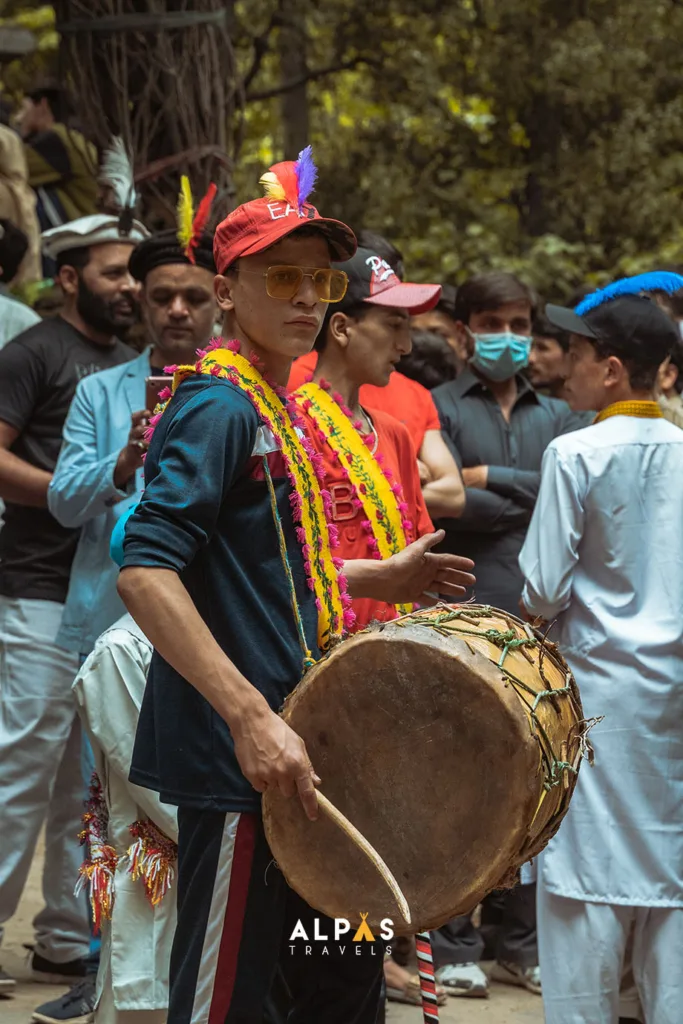
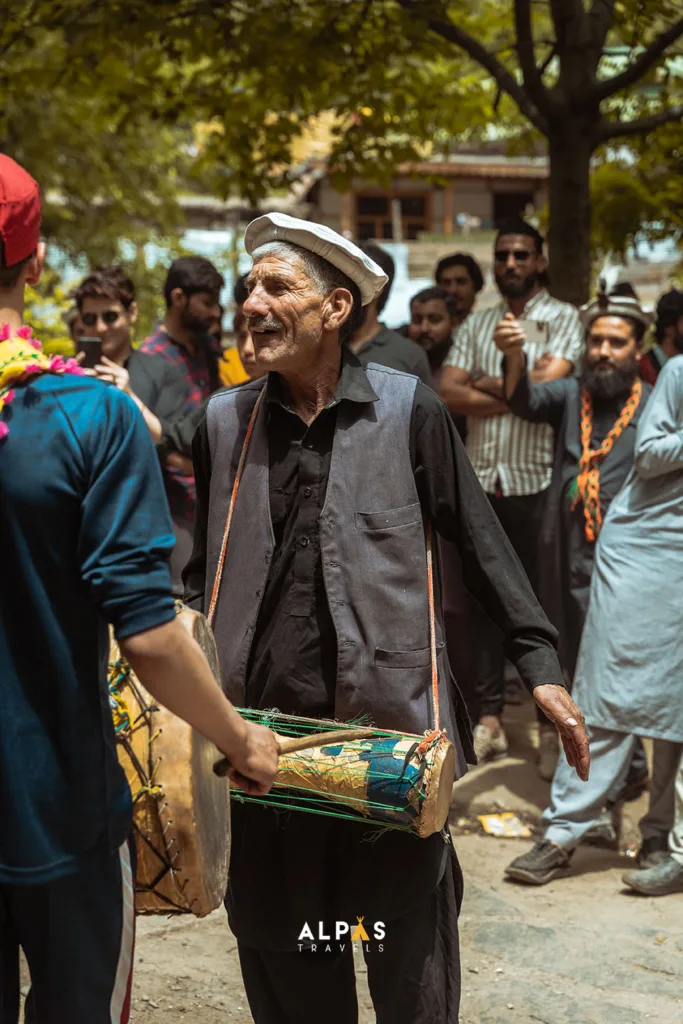
Then comes Daginai, one of the most moving moments of the festival. This concluding song is sung as dancers form a human chain linked by cloth or rope. Tradition says the chain must not break. Everyone grips tightly, dancing in rhythm until, at the final beat of the drums, the cloth is released together — and the festival ends.
It is dramatic, emotional, and unforgettable.
More Than Celebration
These rituals are not performances staged for visitors. They are expressions of identity.
The flowers, milk, songs, and ceremonies all reflect a worldview tied to land, seasons, and community.
And perhaps that is what makes Chilam Joshi so special.
You don’t simply watch it.
You witness it.
Where to Experience Chilam Joshi in Kalash Valleys
The festival is celebrated across the three famous Kalash valleys:
Bumburet Valley
The most accessible and most visited of the three. Many travelers base themselves here during the festival.
Rumbur Valley
Quieter and often considered more traditional in feel. If you like fewer crowds, this valley has a charm of its own.
Birir Valley
Less visited and a bit more remote, but deeply rewarding for cultural travelers. Together these make up the heart of the Kalash Valley travel guide experience.
Many travelers combine the festival with a broader Chitral journey.
How to Reach Kalash for the Festival
Getting there is part of the adventure.
Most routes begin via Chitral, reached either by road or flight connections depending on conditions. From Chitral town, jeep transport usually takes visitors into the Kalash Valleys. Road journeys can be long, but the scenery keeps rewarding you. A better option is to reach Ayun in the Lower Chitral district which takes about 8-9 hours of road trip from Islamabad. Ayun is the entry point into the Kalash Valleys and to go further, you need to hire a 4×4 vehicle as the roads aren’t metalled.
Mountain roads, river gorges, village life — the route feels like a gradual unfolding. If you prefer a smoother experience, guided tours can simplify logistics considerably.
And honestly, during festivals, having local expertise helps.
What to Expect as a Traveler
First — expect authenticity.
This is not a commercial festival staged for spectators. Even though you will see crowds of local tourists but the festival itself is as organic and real as it gets. You will witness centuries of Kalasha traditions and rituals during the festival.
You are entering a living cultural space. Respect matters. Dress modestly. MOST IMPORTANTLY, ask before photographing people. Observe before participating.
And come curious.
You’ll likely encounter music, shared meals, traditional architecture, and an atmosphere that feels surprisingly welcoming.
Also expect simplicity. Facilities are basic in many areas.
That’s part of the charm.
If you usually associate travel in Northern Pakistan only with trekking, the Chilam Joshi festival Pakistan experience shows another side entirely.
A deeply cultural one.
Travel Tips for Visiting Chilam Joshi
A few practical tips can make your trip much smoother.
Book accommodation early, especially in Bumburet.
Pack layers. Days can be mild, evenings chilly.
Carry cash, as ATMs can be limited.
Mobile signals may be patchy.
And perhaps most importantly, approach the festival as a respectful guest, not as a spectacle.
Cultural tourism works best when it is reciprocal.
You learn. Communities benefit. Traditions are respected.
That’s good travel.
Nearby Places to Combine with Your Trip
One of the best things about visiting during Chilam Joshi is how easily you can build a broader itinerary.
Pair it with Chitral exploration. You can explore the Chitral town, Chitral Gol National Park (home to the Markhor animal), Garam Chashma Valley, Qaqlast Meadows and Booni in Upper Chitral district.
Add time in Shandur Pass if visiting in the right season.
Explore broader northern routes afterward.
This turns a festival trip into a richer travel circuit.
FAQs
What is the Chilam Joshi Festival?
It is a spring festival celebrated by the Kalash community to welcome the season and give thanks.
When is Chilam Joshi celebrated?
Annually, from 13th to 16th May, over four days.
Where is Chilam Joshi held?
In the Kalash Valleys, particularly Bumburet, Rumbur and Birir.
Can tourists attend Chilam Joshi Festival?
Yes, visitors can attend respectfully and experience the celebrations.
Is Chilam Joshi suitable for families?
Absolutely. It can be a rewarding cultural experience for families and curious travelers alike.
Why Chilam Joshi Feels So Special
Some journeys impress you.
Others stay with you.
The Chilam Joshi festival tends to do the second.
Maybe it’s the mountain setting.
Maybe it’s the music.
Maybe it’s the rare privilege of witnessing traditions still alive in their own rhythm.
Whatever it is, it feels less like attending an event and more like stepping briefly into another worldview.
And that is a rare gift in travel.
Experience Chilam Joshi with Alpas Travels
If experiencing the Kalash spring festival has made its way onto your travel list, Alpas Travels can help turn it into something unforgettable.
From curated cultural journeys to immersive northern Pakistan experiences, our trips are designed for travelers who want more than just sightseeing.
Explore our cultural tours, check out our northern Pakistan adventures, or get in touch to plan your Chilam Joshi journey with us.
Because some festivals are better experienced, not just read about.
There are no reviews yet.