

- Overview
- Trip Outline
- Trip Includes
- Trip Excludes
- Booking
- Payment & Cancellation
- Gallery
- FAQ
The Spantik Peak Expedition is widely regarded as one of the best introductions to 7,000-meter mountaineering in the Karakoram and an ideal step up for international climbers progressing beyond 6,000-meter peaks. Rising to 7,027 meters, Spantik Peak—often referred to as the Golden Peak—is located near Hunza in northern Pakistan and offers a rare combination of accessibility, safety, and true high-altitude experience.
For climbers from Europe, the UK, and North America, Spantik Peak is especially appealing due to its non-technical Southwest Ridge route, which allows participants to focus on altitude adaptation rather than complex climbing systems. The route provides a gradual ascent profile and well-defined acclimatization rotations, making it one of the most suitable first 7000m summits for well-prepared mountaineers.
The expedition journey includes a classic Karakoram approach trek across expansive glaciers and remote valleys before reaching a fully supported base camp. Stable summer conditions between June and August, combined with careful logistics and experienced local leadership, contribute to Spantik’s strong summit success rate compared to many other peaks in the same altitude category.
Operating in Pakistan requires local knowledge, permits, and a reliable support structure—areas where professionally organized expeditions make a significant difference. With government-licensed guides, English-speaking support staff, and established safety systems, the Spantik Peak Expedition offers international climbers a secure and well-managed environment to experience extreme altitude for the first time.
For those seeking a serious mountaineering challenge without excessive technical risk, the Spantik Peak Expedition stands out as a balanced, confidence-building climb in one of the world’s most spectacular mountain regions.
No details found.
Itineraries
Day 1
Arrival in Islamabad
Arrival at New Islamabad International Airport. Meet & Greet and transfer to the guesthouse/hotel in Islamabad which is 45 minutes’ drive away from the airport. Check-in at hotel, you will have time to chill and freshen up. Once the sun sets, we will head towards the Margalla Hills for dinner at the Monal Restaurant which gives you an amazing view of the whole Islamabad city at night. Overnight at the hotel in Islamabad. Breakfast and dinner only.
Day 2
Fly to Skardu
Catch our early morning 1-hour flight to Skardu. We will have a free day in Skardu to explore the city or sort out your equipment. At night, we will have dinner and team introductions. Overnight at the hotel in Skardu.
In case of flight cancellation, we will leave by road which will be an 18 hours journey split over two days. We would either sleep in Chilas or Naran for the night before heading towards Skardu the next day. Breakfast and dinner only.
Day 3
Buffer Day in Skardu
This will be an emergency day in case of flight cancellation. Participants that have already arrived can visit the Skardu bazaar and do last minute trekking shopping and preparation. Overnight at the hotel in Skardu. Breakfast and dinner only.
Day 4
Drive from Skardu to Arandu
Depart Skardu by 4×4 jeeps for the long scenic drive to Arandu Village, the last settlement before the mountain approach (≈7–8 hrs). All meals will be served by the camp staff. Camp near Arandu for the night.
Day 5
Trek to Chogo Brangsa Camp
Begin trekking along the Chogolungma Glacier to Choco Brangsa Camp (≈5–6 hrs). Enjoy alpine views as you gain altitude. All meals will be served by the camp staff.
Day 6
Trek to Bolocho Camp
Continue along the glacier to the next camp site (≈6–7 hrs). This scenic walk passes wildflower meadows and rolling moraine terrain. All meals will be served by the camp staff.
Day 7
Trek to Spantik Peak Base Camp
Arrive at Spantik Base Camp, where your mountain home for the coming weeks is established. Porters drop gear, and you settle in for the climb ahead. All meals will be served by the camp staff.
Day 8-23
Acclimatisation & Climbing Period
This block is dedicated to acclimatization and summit efforts. The team will rotate to higher camps (Camp I, II or III) and return to Base Camp, adjusting the schedule based on weather and conditions. Patience and flexibility are key at high altitude. All meals will be served by the camp staff.
Day 24
Departure from Base Camp
After the summit push, begin your descent along the same glacier route back toward lower ground. (≈7–8 hrs trekking). All meals will be served by the camp staff.
Day 25
Return to Skardu
Reach Arandu Village for lunch, then drive back to Skardu. There may be a stop at local hot springs. Dinner & night stay at the hotel in Skardu.
Day 26
Fly to Islamabad
Early morning flight from Skardu to Islamabad (weather permitting). Enjoy a chill day in the capital and a celebratory group feast, or travel overland via the Karakoram Highway if flights are delayed. Breakfast and dinner only.
Day 27
Contingency Day in Islamabad
This will be a contingency day in case of any problems getting back from Skardu due to flights. It will be a free day in the capital city and we will end it with dinner a group dinner. Breakfast and dinner only.
Day 28
Flight back home!
The hotel check-out time is 11am. Airport transfers will be provided today for your flight back home. If you want, you can extend your stay in Islamabad in which we will assist you and make necessary arrangements. Breakfast only.
- Government climbing royalty & permit fee
- Central Karakoram National Park (CKNP) & waste management fee
- All domestic flights and road transfers as per itinerary
- Hotel accommodation on twin-sharing basis
- Trekking accommodation during the approach trek and at base camp
- All camping site and bridge fees
- Arrangement of official government briefing and debriefing
- Assistance with import/export permits from the Ministry of Tourism
- Electricity generator at base camp
- Basic first aid medical kit available at base camp
- Satellite phone for emergency communication (usage at extra cost)
- High-quality expedition infrastructure including D3V sleeping tents, toilet tent, shower tent, and storage tents
- Fully equipped expedition kitchen with cooking gear, crockery, cutlery, fuel, and shared equipment
- Up to 25 kgs of porter services per person to base camp
- Government-licensed professional mountain guide (mandatory requirement)
- High Altitude Porter for the team
- International airfare and airport taxes
- Pakistan visa fees and personal travel/medical insurance
- Porter services exceeding 25kgs
- Tips and gratuities for drivers, porters, guides, and support staff
- Single room supplement, if requested
- Airport transfers for participants arriving or departing on individually arranged flights
- Optional excursions or any deviation from the scheduled itinerary
- Personal climbing equipment, including sleeping bag
- Personal expenses such as phone calls, laundry, beverages (soft drinks or alcohol), and room service
- Gratuities for personal services and items of a purely personal nature
- Any service not specifically mentioned in the “Trip Includes” section
- Services beyond Base Camp, including high-altitude support above BC
Payment:
Payments can be made by Bank Transfer OR Wise (all major cards and most currencies). A deposit of $1,000 is required to secure your position on the tour.
Cancellation Policy:
If you need to cancel your tour for some reason, our cancellation policy is:
• 2+ months in advance: Full refund minus deposit.
• 1-2 months in advance: 50% refund minus deposit.
• < 1 month in advance: 25% refund minus deposit.
• < 2 weeks in advance: Too last minute! No refunds, but we can move
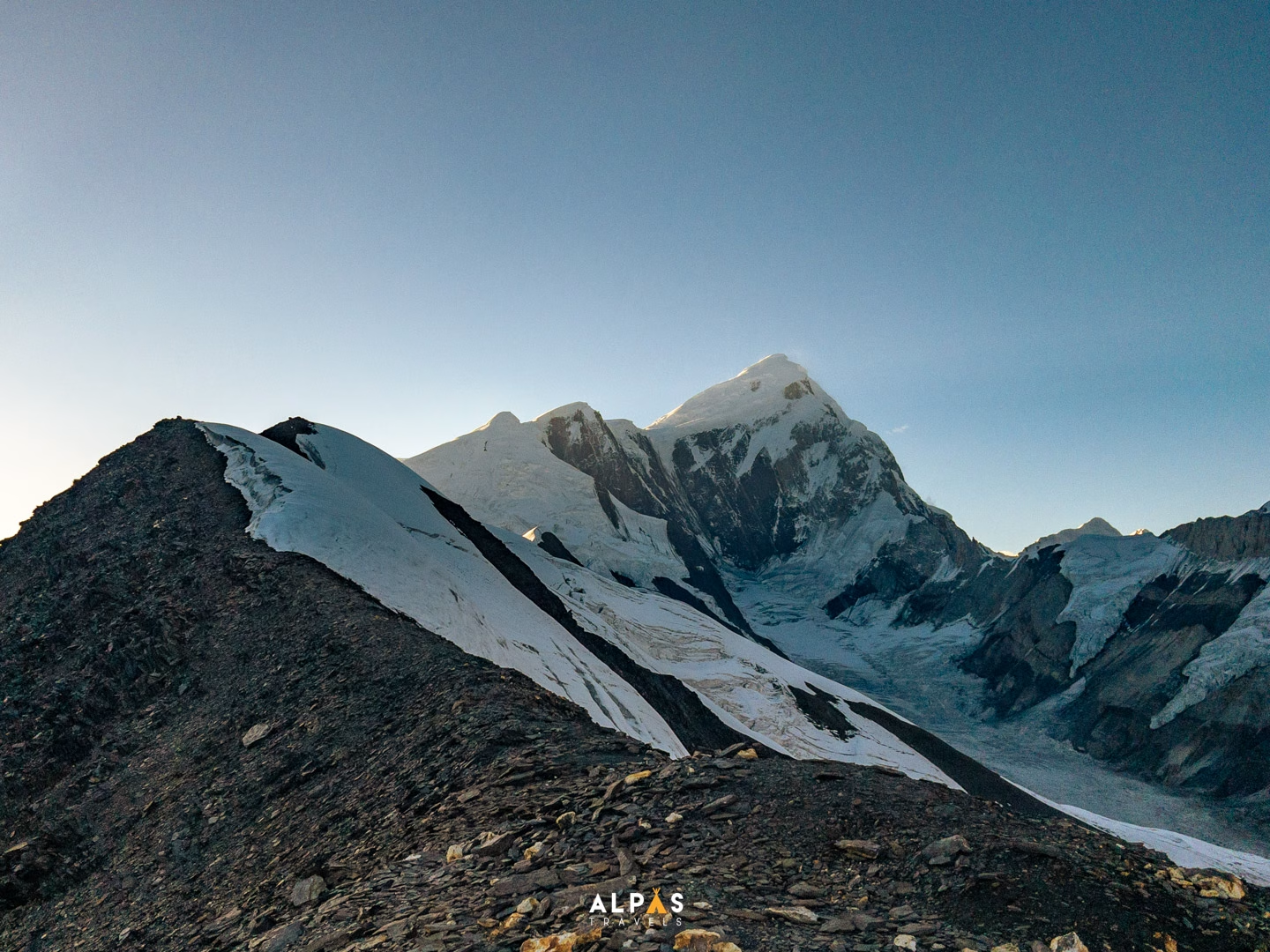


Spantik Peak is ideal for climbers moving from 6000m peaks to their first 7000m expedition. Prior high-altitude experience is required.
It is considered a moderately difficult expedition with no major technical climbing but significant altitude challenges.
The expedition typically lasts 28–32 days, including acclimatization and summit attempts.
Spantik Peak has a relatively high success rate compared to other 7000m peaks, especially during July & August.
Yes, experience with crampons, ice axe, and high-altitude trekking is essential.
Contrary to the narratives often portrayed in mainstream news, Pakistan has proven to be one of the most secure countries in the opinion of many famous travelers and travel bloggers. Alpas Travels is committed to dispelling the prevailing negative stereotypes linked to the country by unveiling a facet of Pakistan that rarely receives media attention.
Late spring usually brings warmer weather, although there may still be lingering snow in the high mountain regions. Fall journeys, on the other hand, tend to be cooler, and the urban areas are less sweltering. Be prepared for a diverse range of weather conditions. You might find yourself bundled up in your down jacket at times, while in cities like Lahore and Islamabad, temperatures can reach up to 35 degrees.
The prices are determined for accommodations in twin-sharing rooms, and if you prefer single occupancy, there is an additional cost for hotel rooms and cottages. Our lodgings during the trip encompass a delightful variety, ranging from guesthouses, hotels, and cottages. Please note that the hotel rooms in the mountain regions do not come with air-conditioning, although rest assured, the accommodations in Lahore and Islamabad – the two warmest destinations – are equipped with air-conditioning.
To conclude the tour, we enjoy a night's stay in a 4-star hotel in Islamabad or Lahore for group tours and 3-star for expeditions.
Connectivity is limited at times. Though cities have decent signals and wifi, mobile signals in Gilgit Baltistan territory are unreliable. Wifi is slow (if even available) and many areas have no signal. We’ll arrange local SIM cards for you if desired, but overall don’t count on doing video calls or uploading videos unless we’re in a city.
On mountaineering expeditions, there's no connectivity except satellite phones.
Hygiene standards in Pakistan can be less than ideal. The accommodations we have selected, such as hotels and guesthouses, maintain clean facilities. However, when we venture on the road, we may encounter restroom conditions that can be less than pleasant. Additionally, the quality of food can pose challenges, and it's not uncommon to experience stomach discomfort. Rest assured, we will make every effort to locate clean and safe food options and aid anyone who may become ill, as this is a common occurrence when traveling in this region.
You can easily apply for a Pakistan tourist visa online for the normal tour groups. But for the trekking & mountaineering expeditions, you need to apply for trekking & mountaineering visa in the tourist visa section on the website.
Apply on the only official Pakistan e-visa website. You can start your application on the NADRA website here: https://visa.nadra.gov.pk/tourist-visit-visas/
As an average, it takes no more than 1 week to get the visa approval.
Tips and instructions will be shared upon booking a spot.
You can find ATMs in the cities, but better to bring cash for the Northern Areas and preferably converted to Pakistani Rupees PKR.
Related Trips

Climb Khosar Gang Peak
Please login to add your wishlists.Kick-off your high altitude mountaineering path by climbing one of the easiest 6000m peak in Shigar. Climb Khosar Gang Peak with Alpas!